Source CE Certified Industrial Haze Meter for Lab, QC, and R&D
Find 30 CE certified industrial haze meters with digital displays and electronic load systems for laboratory, quality control, and research applications. Compare specifications including transmittance, haze range, and model numbers from verified Chinese manufacturers.
Key considerations
Products List




Comprehensive Sourcing Guide
Strategic Sourcing Guide for CE Certified Industrial Haze Meters
Understanding the Technical Landscape of Haze Measurement
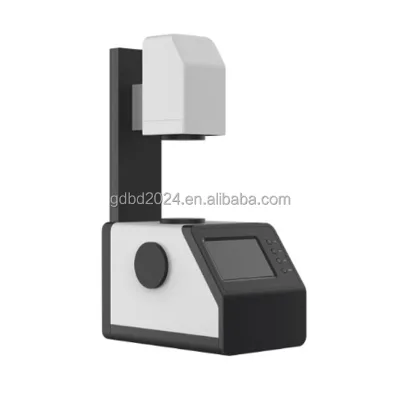
When sourcing industrial haze meters, buyers must first distinguish between the specific functional requirements of the instrument and the broader category of material testing machines. The core keyword "CE certified industrial haze meter" points to a specialized device designed to quantify the optical properties of materials, specifically their ability to scatter light. In the observed market data, products labeled as "Universal Testing Machines" or "Material Testing Machines" often appear alongside optical instruments, but the specific attributes for haze measurement are distinct. A high-confidence fact regarding the optical performance of these devices indicates a Transmittance range of 0 to 100.00% and a Haze range of 0 to 30.00%. This specific range is critical for applications involving transparent plastics, films, and glass where clarity is a primary quality metric.
The technical architecture of these meters varies significantly. Some units feature a "Digital" display with "Electronic Load" systems, while others utilize an "Integral Sphere Size" of φ154mm to ensure accurate light collection. The resolution of haze measurement is a key differentiator; observed specifications list a resolution of 0.01 Unit, which allows for the detection of minute variations in material clarity. Furthermore, the "Minimum Reading" is often specified as 0.01% for both Transmittance and Haze, ensuring high precision in quality control environments. Buyers should note that while some instruments are described with "Computer Control" and "Dynamic Load" capabilities, these features may belong to tensile testing machines rather than optical haze meters. It is essential to verify that the specific model number, such as Pw-626 or Pw-1800, corresponds to the optical measurement function rather than mechanical strength testing. The operating temperature range is another critical technical parameter, with observed data suggesting a standard range of 0~40℃, which defines the environmental constraints for laboratory or production floor usage.
Navigating Compliance and Certification Verification
The requirement for "CE certification" is a non-negotiable baseline for many industrial buyers, particularly those operating within or exporting to the European Economic Area. The CE mark indicates conformity with health, safety, and environmental protection standards for products sold within the EEA. In the context of the provided data, "CE" is explicitly listed as a certification attribute for certain industrial instruments. However, buyers must exercise caution when interpreting this label. The presence of a CE mark on a product page does not automatically guarantee that the specific optical measurement functions comply with all relevant European directives for machinery or electromagnetic compatibility.
Buyers should verify the specific standards cited in the product documentation. The observed data references standards such as GB/T16491, GB/T1040, GB/T1041, ISO, and ASTM. While these are legitimate standards, the specific application to haze measurement often involves standards like ASTM D1003 or ISO 14782. Although these specific optical standards appear in the background context, they are not explicitly confirmed as the primary compliance standard for every listed product in the high-confidence facts. Therefore, the procurement strategy must involve a direct request for the Certificate of Conformity (CoC) and the specific test reports that demonstrate compliance with the relevant CE directives. The "Low-confidence background" section lists several standards including ASTM D1003/1044 and JIS K7105, which are relevant to haze and transmittance testing. A prudent buyer will cross-reference the manufacturer's declared standards against these international benchmarks to ensure the instrument's readings are legally and technically defensible in their specific market.
Analyzing Cost Drivers and Pricing Structures
The pricing for industrial haze meters is influenced by a complex matrix of technical specifications, build quality, and customization options. The observed price range in the market spans from $100 to $15,000 USD, a wide disparity that reflects the difference between basic desktop units and advanced, computer-integrated systems. A unit priced at the lower end of this spectrum, potentially around $100 to $500, might be a simple, manual or semi-automatic device with a "LED Digital Display" and basic "Carton Case" packaging. In contrast, the higher-end instruments, approaching the $15,000 mark, likely feature "Computer Control," "USB" communication interfaces, and robust "Strong Wooden Case" or "Ispm 15 Certified" packaging for international shipping.
Several specific factors drive these costs. First, the "Customization" availability is a significant cost variable. Products marked as "Customized" or offering "customized version" standards often command a premium due to the engineering effort required to tailor the instrument to specific client needs. Second, the "Loading Method" and "Electronic System" play a role; units with "Electronic Load" and "Automatic" measurement methods are generally more expensive than those requiring manual operation. Third, the "Instrument Dimensions" and "Net Weight" can impact logistics costs, which are often factored into the final price. For instance, a unit with dimensions of 740mm270mm300mm and a weight of 7kg will have different shipping requirements compared to larger, heavier models. Buyers should also consider the "Output Communication Interface"; the inclusion of a USB port for data transfer to a computer adds value but also increases the unit cost. It is crucial to understand that the "MOQ" (Minimum Order Quantity) observed in the data is consistently 1, suggesting that buyers can procure single units without volume-based price breaks, although bulk orders may still offer negotiated discounts.
Identifying Typical Applications and Use Cases
The application of industrial haze meters is diverse, spanning from research laboratories to high-volume manufacturing floors. The "Application" field in the product data explicitly lists "Lab" as a primary use case, indicating that these instruments are frequently employed in quality assurance departments, R&D facilities, and academic institutions. The "Structure" of these devices is predominantly "Desktop," which suits controlled laboratory environments where stability and precise positioning are paramount. However, the "Loading Method" described as "Dynamic Load" in some contexts suggests that certain models may be adaptable for more rigorous testing scenarios, though this terminology is often associated with tensile testing rather than optical measurement.
The "Material" specification of "Plastic" highlights the primary industry sector for these devices: the plastics and polymer industry. Manufacturers of plastic films, sheets, and containers rely on haze meters to ensure product transparency meets consumer expectations. The "Measure Method" being "Automatic" is particularly valuable in production lines where speed and consistency are required to prevent defects. The "Mass Scope of Workpiece" being less than 900kg and the "Max Diameter of Workpiece" under 500mm define the physical limits of the samples that can be tested. This makes the instruments suitable for testing standard plastic sheets, films, and small glass panels, but not large industrial structures. The "Wavelength Spacing" of 10nm is another critical application factor, allowing for detailed spectral analysis if the instrument is used for more advanced optical characterization beyond simple haze and transmittance.
Supplier Evaluation and Geographic Considerations
When evaluating suppliers for CE certified haze meters, the geographic origin of the manufacturer is a significant factor in the supply chain. The data indicates that products originate from various regions in China, including "Dongguan," "Shaanxi," and "Zhejiang." Dongguan is a major manufacturing hub known for high-precision electronics and machinery, which may correlate with higher quality control standards. Shaanxi and Zhejiang also host significant industrial capabilities, but the specific expertise in optical instrumentation may vary by facility. Buyers should not assume that all products from these regions have identical quality levels; instead, they should investigate the specific factory's history and reputation.
The "prod_packing" details offer insight into the supplier's attention to logistics and product protection. Some suppliers use "Strong Wooden Case" or "Wooden Case (Ispm 15 Certified) + Foam Cushioning," which indicates a commitment to safe international shipping. Others may use "Carton Case" or "Carton or Customized" packaging, which might be suitable for domestic or regional delivery but less ideal for long-distance export. The "Standard" of "GB/T16491" and others suggests that the manufacturers are familiar with Chinese national standards, but the buyer must ensure these align with their local regulatory requirements. The "Model No." variations, such as Pw-810, Pw-1800, and Pw-626, suggest a diverse product line, and buyers should verify that the specific model they are purchasing has the correct CE certification documentation. It is also important to note that "Customized" models may have longer lead times and require more rigorous supplier vetting to ensure the customization does not compromise the core safety or performance standards.
Quality Control and Long-Term Procurement Strategies
Ensuring the long-term reliability of an industrial haze meter requires a robust quality control strategy. The "Repeatability" of the instrument is a critical metric, with observed data stating "Light Transmittance ≤ 0.5% Haze ≤". This specification defines the consistency of the measurements over repeated tests. A buyer should verify that the supplier provides calibration certificates and that the instrument can be recalibrated by authorized service centers. The "Operating Temperature Range" of 0~40℃ is a standard constraint, but buyers in extreme climates must consider whether the instrument requires environmental controls to maintain accuracy.
For long-term procurement, the "Output Communication Interface" is a strategic asset. A "USB" interface allows for easy data integration with laboratory information management systems (LIMS), facilitating automated reporting and data archiving. This connectivity reduces the risk of human error in data entry and streamlines the quality control workflow. Additionally, the "Material" of the instrument itself, often "Plastic" or metal composites, should be durable enough to withstand daily use in a busy industrial environment. The "Instrument Net Weight" of 7kg for some models suggests portability, which can be advantageous for moving the device between different testing stations. However, buyers must balance portability with stability; a lighter device may be more susceptible to vibration interference during measurement.
Finally, the "Standard" of "customized version" indicates that suppliers are willing to adapt their products. While this is a positive attribute for specific needs, it introduces complexity in quality assurance. Buyers should establish clear acceptance criteria before production begins, ensuring that the customized features do not deviate from the core performance requirements. The "Certification" of "CE" must be maintained throughout the product lifecycle, and buyers should inquire about the supplier's policy on updates and compliance with changing regulations. By focusing on these technical and procedural details, buyers can secure a reliable supply of industrial haze meters that meet their specific operational and regulatory needs.
FAQs
What certification do these industrial haze meters hold?
These instruments carry CE certification as a baseline compliance standard. Buyers must verify specific test reports to ensure conformity with relevant European directives for machinery and electromagnetic compatibility before finalizing procurement.
How is the haze measurement accuracy defined for these devices?
The resolution for haze measurement is specified as 0.01 Unit with a minimum reading of 0.01%. Repeatability is maintained with light transmittance and haze values staying within strict limits to ensure consistent quality control results.
Which measurement standards are referenced for these testing machines?
Products reference standards including GB/T16491, GB/T1040, GB/T1041, ISO, and ASTM. Buyers should cross-reference these declared standards against specific optical benchmarks like ASTM D1003 to ensure legal and technical defensibility in their market.
Can these units be customized for specific client requirements?
Yes, customization is available for certain models to tailor the instrument to specific needs. Customized versions may command a premium price and require longer lead times due to the additional engineering effort involved in the modification.
What is the typical price range for these industrial instruments?
The observed price range spans from 100 to 15000 USD depending on features. Lower-end units are simple desktop devices, while higher-cost models include computer control, USB interfaces, and robust wooden case packaging for international shipping.
Where are these haze meters typically manufactured and shipped from?
Products originate from various Chinese regions including Dongguan, Shaanxi, and Zhejiang. Packaging varies from carton cases to strong wooden cases with ISPM 15 certification to ensure safe logistics for international delivery.